Monday, October 22, 2012 0 comments

Speak Without Fear: A great online resource for developing professional speakers


I've known Deb Sofield for years. A professional speaking coach, she's worn a lot of hats in the Upstate South Carolina, including as a business and community leader. She chairs the Water and Sewer board that serves much of Greenville County and has been a leader in the Southeastern Institute for Women in Politics.

She's also got a free monthly newsletter that focuses upon developing professional speaking skills: Speak Without Fear. As someone who has taught speech at the college level, I'll say it's a great resource that you should check out.

Wednesday, October 17, 2012 0 comments

"Binders" and punishing equality in the workplace

In this week's Presidential debate, when Mitt Romney discussed his efforts to ensure gender diversity in hiring cabinet positions as Governor of Massachusetts, one might've thought feminists would have praised him for openly embracing the importance of ensuring gender equality in the workplace - but once again, they proved that no good deed goes unpunished.

When Romney was confronted with a pool of mostly-male candidates to help him run Massachusetts state government, he made an effort to cast a wider net by specifically seeking out female candidates - hence the "binders of women" remark, which was likely intended to mean "binders of resumes from women". The result of this effort was that ten of the twenty top positions in his administration where filled by women, including Beth Myers, his Chief of Staff, and Jane Edmonds, a self-admitted liberal Democrat who was appointed Secretary of Workforce but who spoke glowingly about him at this year's GOP convention (please see her convention speech below).

While one would think that Romney would be praised for creating more opportunities for women, the news media and Internet was full of attacks from those on the political Left who ignored the substance of his comments and used the phrase "binders of women" out of context to fuel their latest political attacks against him.

Again, here's where I step out of the political context and put on my human resources hat to discuss this issue in a more informed context.
0 comments

Useful E-verify information


Immigration compliance and employment discrimination related to immigration compliance can put employers between a rock and a hard place. As more states require E-verify and the feds are ramping up enforcement against employers who misuse E-verify, it's important to get the facts.

Here are some basics for those who use E-verify:
  • Employers must still complete I-9 forms.
  • All new hires must be entered within three days of starting work.
  • All new hires must be entered into the E-verify system for confirmation of eligibility to work, not just some of them.
  • Employers cannot use E-verify to screen existing employees UNLESS a company been awarded a federal contract on or after September 8, 2009, that contains the Federal Acquisition Regulation (FAR) E-Verify clause (see more online).
  • E-verify notifications of work eligibility are NOT determinations of a new hire's immigration status. That's not a matter for employers to decide, so don't play cop or make assumptions.
  • When you receive a TNC (Tentative Non-Confirmation) notice from the system, be sure to print the notice, provide a copy to the employee and follow the directions. There are employer-specific instructions, as well as instructions for the new hire to follow.
  • Log in to E-verify on a daily basis to check for updates on new hires until cases are resolved.

But there's a lot of other information that you need to know, so don't take this article as a definitive answer about the system, rather use it as an invitation to learn more about it if you're not using it - or to brush up on what you know if you are a current E-verify user.

Monday, October 15, 2012 0 comments

Free safety Food for Thought: "Lessons Learned"


The folks at Safe-T-Net, a safety engineering consulting firm out of Charlotte, NC, have developed a free monthly resource in the form of a one-page look at safety incidents. You can subscribe to "Lessons Learned" and get on their monthly email list.

While they don't offer an in-depth look, they cover a wide range of industries and types of incidents. Some of these incidents and assessments can be useful in reminding us safety professionals to think about these things.

It won't change the world, but it's free and it's written by people who care.
Friday, October 12, 2012 0 comments

Feds cracking down on E-verify misuse


As E-verify usage becomes more common, especially with an increasing number of states passing immigration compliance laws which mandate the use of E-verify for new hires, employers need to be aware of what it is - and what it is not - so they can use it without getting into trouble.

It appears as if the federal Justice Department is taking this issue seriously, first by warning of plans to  ramp up investigations and enforcement actions for E-verify related acts of employment discrimination and then by taking action against employers who misuse of E-verify has an adverse impact upon employees. These are certainly warning signs those who use E-verify - or plan to - should take seriously.
Thursday, October 11, 2012 0 comments

IAM & Boeing: When "No" doesn't really mean no

Having been booted from the Charleston Boeing facility, and then losing a major NLRB battle to keep the plant from opening, the International Association of Machinists and Aerospace Workers labor union is back in Charleston, trying to get into the facility that didn't want them.


Obviously they don't think that "no" really means "no".

Don't let these guys take your daughter on a date.


Wednesday, October 10, 2012 0 comments

Legislative success in the S.C. State Senate

While we've seen a lot of criticisms leveled at the State Senate, calling the institution a dead-end for legislation passed by the House. While some very useful bills have stalled in that chamber, not every good idea or vital piece of legislation dies there. As one of the lead negotiators for the construction industry and a primary instigator of efforts to reform the state's underground utility safety laws, I know firsthand what the Senate can accomplish.

Working with the Senate (and later House members), laws that were enacted in 1978 and were considered some of the most outdated in our nation's history one of the worst in the nation in regard to safety, were finally updated. These reforms helped to head off potential hazards that were putting both construction workers and the general public in harm’s way.
Monday, October 8, 2012 0 comments

Employee handbook rulings expand NLRB's reach into non-union workplaces

Employers who think that having a union-free workplace will protect them from National Labor Relations Board (NLRB) actions should think again. The federal labor agency has been broadening its reach into examining employer practices in non-union workplaces with no union activity taking place.

One area which is drawing increased scrutiny from the NLRB is the content of employee handbooks, as indicated by recent rulings issued by the board (Banner Estrella Medical Center, 358 NLRB No. 93, Hyundai America Shipping Agency Inc. 357 NLRB No. 80 and Karl Knauz Motors, 358 NLRB No. 164).

Unless the November elections result in a shake-up of the Board, employers and HR staff responsible for writing and maintaining the content of employee handbooks may want to scrutinize these documents for potential troublespots.
Sunday, October 7, 2012 0 comments

Watch for I-9 revisions next year - maybe

A recent story on the Society for Human Resource Management website reports that a new version of the I-9 form may be released next year - but that nobody could agree on exactly when that might be.

There are two versions of the I-9 form which employers should be using: the current version (Rev. 08/07/2009) or the previous version (Rev. 02/02/2009). 

Keep in mind that even if your company uses E-Verify, either voluntarily or in you're in a state which mandates it's use, you are still required to complete an I-9 form for every new hire and retain the information as you would have before your company began using E-Verify.


Friday, October 5, 2012 0 comments

Growing opposition to proposed federal hiring quotas

Back in December of last year, the Obama Administration's Department of Labor's Office of Federal Contract Compliance Programs posted a notice that the agency was planning to impose hiring quotas for individuals with disabilities on federally-funded projects. This proposal has drawn fire from a wide range of business and professional organizations who have expressed concerns about the adverse impact of this policy upon the business sector.

The proposed OFCCP policy would mandate a seven percent hiring quota for disabled and an additional two percent hiring quota for those with undefined “severe disabilities.” Patricia Shiu, director of the Office of Federal Contract Compliance Programs, claimed this policy will help reduce a thirteen percent unemployment rate for those with disabilities. Shiu defended the proposed mandates, claiming that "specific goals" and "real accountability" were needed to ensure increased hiring of disabled individuals on federally-funded projects.

Wednesday, October 3, 2012 0 comments

Questions about effectiveness of state OSH programs may lead to changes

Federal OSHA officials efforts to come up with effective measures for state-run Occupational Safety &  Health (OSH) programs keep coming up short, according to several reports which have examined how state-run programs are assessed. These measures are needed to ensure that state-run programs meet, if not exceed, standards and performance levels of the federally-run OSHA program which is applied in states without self-run programs.

Concerns about OSH programs in a number of states now include a report from the Office of the Inspector General (OIG) of the U.S. Department of Labor which has criticized the federal agency's ability to develop effective state OSH program measures. More bad news came in an August report from the Federal Annual Monitoring Evaluation (FAME), which criticized a number of states for the poor quality of whistle-blower programs.

These criticisms present major concerns for the quality and effectiveness of workplace safety and enforcement as the federal agency delegates the enforcement of workplace safety in many states, thus relying upon those states to develop effective safety programs that balance promoting safety with proper and effective enforcement.
0 comments

E-verify mandate underway in North Carolina


Following the lead of South Carolina, which was one of the first states to pass workforce immigration compliance legislation following the Chamber of Commerce of the United States v. Whiting ruling, North Carolina is now mandating the use of E-Verify for screening all new applicants.

North Carolina will phase in compliance, based upon the size of a company's workforce, as follows:
  • Effective Oct. 1, 2012—employers with 500 or more employees will be required to use E-Verify to check work authorization for all new hires.
  • Effective Jan. 1, 2013—employers with 100 or more employees will be required to use E-Verify to check work authorization for all new hires.
  • Effective July 1, 2013—employers with 25 or more employees will be required to use E-Verify to check work authorization for all new hires.
For companies with multi-state workforces, the agency will consider just in-state employees towards the determination of the first date of enforcement.

At this time, the North Carolina legislation exempts employers with less than 25 employees as well as seasonal workers (but keep reading because federal requirements may still apply).
Wednesday, September 26, 2012 0 comments

Social Media increasingly being used as evidence


As if we haven't seen enough written about the need to exercise caution about what is being said in social media, another word of warning comes from Allen Smith, who recently interviewed David Osterman, a New Jersey attorney specializing in labor and human resources issues for a recent story in the Society for Human Resource Management website

While this news that social media is impacting what takes place in courtrooms probably isn't surprising to many, the details of the story bear attention in the article, Smith warns readers that:

"Social media has filtered into courtrooms, transforming jury selection; questioning of witnesses; interactions between jurors, lawyers and judges; and evidence. And employment litigation has been affected ..."

In the story, Osterman details how social media is being used to do advance research for jurors and witnesses, as well as how social media commentary is qualified as evidence in the courtroom. For those who want to protect their company from legal exposure or prepare a strong defense for cases that may go to trial, this story makes for good reading.
Tuesday, September 25, 2012 0 comments

More signs of ramped-up OSHA enforcement and penalties


It seems that some of these efforts have drawn some controversy, most notably the agency's Severe Violator Enforcement Program (SVEP), which kicked off two years ago, replacing the agency's Enhanced Enforcement Program with the aim of focusing enforcement efforts upon:

(H)igh-emphasis hazards, which are defined as high gravity serious violations of specific fall standards -- 23 such standards are listed in general industry, construction, shipyards, marine terminal, and longshoring -- or standards covered in National Emphasis Programs focused on amputations, combustible dusts, crystalline silica, lead, excavation/trenching, shipbreaking, and process safety management.
Tuesday, September 18, 2012 0 comments

Immigration enforcement focusing on employers


Federal immigration officials in Kansas are applying severe measures to punish those who employ undocumented workers:

After an Overland Park couple were indicted, accused of knowingly hiring illegal immigrants and paying them less than other employees, federal authorities said Tuesday that they would seek to seize the couple’s two hotels.

This followed a raid earlier this year which found that roughly half the employees at the two hotels were undocumented workers. The feds allege the couple paid the workers with cash and paid them less than the minimum wage, including to an undercover agent who told the couple he was an illegal alien.

According to Kansas U.S. Attorney Barry Grissom, the agency would continue to go after employers for illegal hires, warning "We are going to enforce immigration laws, and we are going to enforce them equally ... we’re not going to enforce them merely on the backs of (undocumented workers).

This is part of a new approach to dealing with the illegal immigration issue by going after employers. Two years ago, the New York Times reported on the agency's new focus:
Thursday, September 13, 2012 1 comments

The wrong way to handle an immigration audit

There are right ways to handle an immigration compliance audit and there are wrong ways.

In Los Angeles, Yoel A. Wazana, 38, owner and production manager of Wazana Brothers International, Inc., doing business as Micro Solutions Enterprises (MSE), decided to try one of the wrong ways and will now have to plead guilty plead to one felony count of false representation of a Social Security number. This comes after a 2008 raid resulted in the arrest of eight company workers on criminal charges and another 130 for  administrative immigration violations. 

Considering the extent to which he attempted to cover up potential problems, he's lucky to get off so lightly:

According to court documents, shortly after MSE received notification in April 2007 that HSI planned to audit the company's payroll and hiring records, Wazana directed that about 80 of MSE's most experienced employees – at least 53 of whom did not have work authorization – be relocated to another manufacturing facility. When investigators requested hiring records from MSE on three separate occasions, the company failed to provide paperwork for those unauthorized workers. The plea agreements filed in this case also describe how, after learning of the ICE audit, Wazana conducted meetings with MSE's assembly line workers, instructing them to obtain valid work authorization documents and return with those documents, suggesting that he did not care if the documents were actually theirs.

As this blog is not written by an immigration attorney, I won't attempt to tell you the right ways to handle an immigration audit, but based upon my experience in the field of HR (and having passed immigration compliance audits), compliance with the law in hiring practices seems like a good way to keep out of trouble.  
Wednesday, September 12, 2012 0 comments

Questions about Unemployment Insurance reforms in South Carolina


Depending upon who you ask, efforts to crack down on eligibility for unemployment insurance may or may not be paying off. This year, the agency that issues these payments says they're on track to pay out significantly less for unemployment claims, with an expected $300 million paid out, a full third less than the $450 million paid out in 2011.

Why is this important? The state's unemployment insurance fund is supported by payroll taxes from employers. Fewer claims allow the agency to cut back taxes and pay back money borrowed from the federal government to help make payments in past years.

But there are differing opinions on the issue about the potential for rate reductions for employers between staff who oversee the program and State Senator Kevin Bryant, an Anderson County Republican who chairs the State Senate's Labor, Commerce and Industry Committee's subcommittee that oversees unemployment insurance issues.
Wednesday, August 29, 2012 0 comments

Underground utilities - not as deep as you'd think

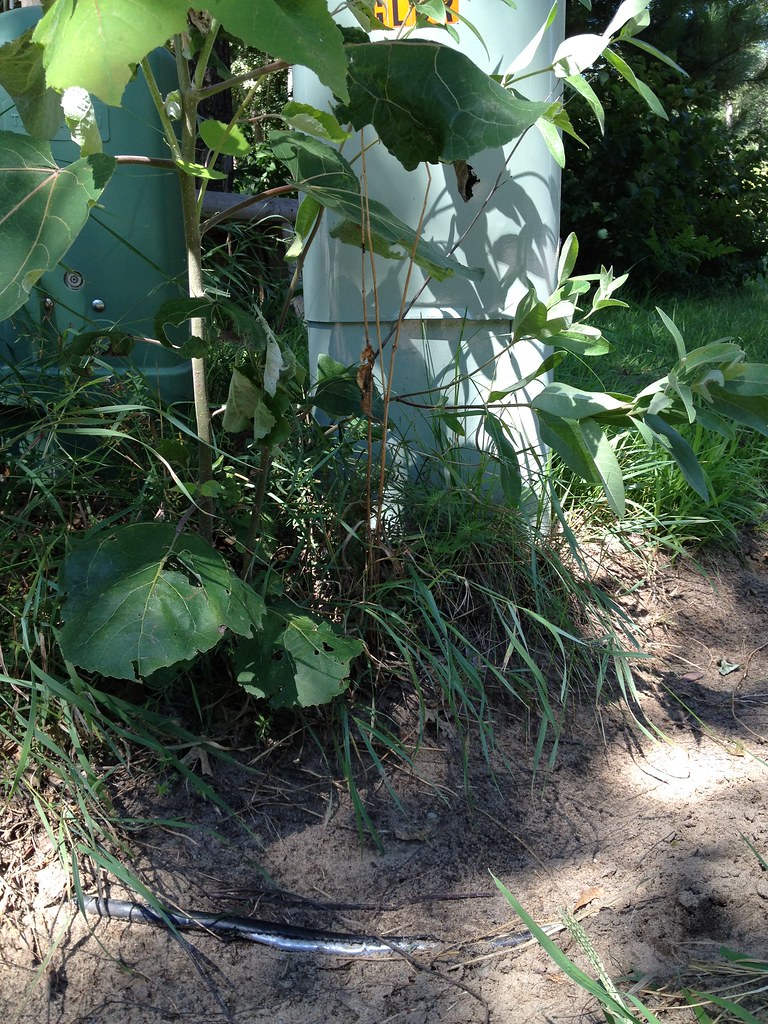
The recent issue of Damage Prevention Professional Magazine shows photos which point out the need to watch out for buried utility lines hear the surface. While damages which occur in such instances are often blamed on construction contractors who are digging, there's much to suggest that when such damages take place, utility companies and the firms they contract to install underground lines may bear some of the blame.

While all but three states require marks to be within 18 to 24 inches of the actual underground location of buried lines and pipes, not every state's laws speak to the matter of depth of lines. However, a number of states do provide guidance on the matter, as does a federal study, suggesting that it's recognized that lines should be buried deep enough to ensure that light digging or scraping doesn't hit them.
Sunday, August 26, 2012 0 comments

Stalking and violence - legal for labor unions

It's well-known that labor disputes can result in violence against persons and property in workplaces in the United States. But what isn't as well known is that in some cases, the courts and the laws are giving labor unions license to harm and harass companies and workers, according to a report issued by the U.S. Chamber of Commerce's Workforce Freedom Initiative.

Entitled "Sabotage, Stalking and Stealth Exemptions: Special State Laws for Labor Unions", the report looks at how both courts and some states have turned a blind eye to threatening and dangerous behaviors, going against the growing concerns over combating violence and threatening behaviors in the American workplace.

The report begins by tracing the history of state exemptions to a 1973 ruling by the U.S. Supreme Court (United States v. Enmons, 410 U.S. 396) which held that ruled that violence in pursuit of union demands cannot be prosecuted under federal law, arguing that violent activities, when used during a strike by workers of the Gulf States Utilities Company, did not meet the standard of "wrongful" conduct needed to convict in a federal extortion case. From there, a number of states are called out for giving unions a pass on threatening and violent conduct in workplaces.
Friday, August 10, 2012 0 comments

New federal EEO expectations for criminal background checks

Criminal background checks can be an effective way to avoid problems in the workplace, but if not done properly, background check processes can create more headaches than they avoid, thus employers should use them with caution. 

A recent 4-to-1 vote by the U.S. Equal Employment Opportunity Commission (EEOC) to approve new guidance for employers conducting criminal background checks is certainly going to raise the bar even higher for employers.While the guidance from the EEOC is not a regulation, it is a warning of growing concern by the Commission and will help inform its field staff when conducting investigations and considering enforcement actions. 

One of the key motivators for this decision was driven by concerns about employers who inappropriately used criminal background checks. The most egregious example was employers who screened out applicants based upon arrest histories, not taking the time to determine if the arrests led to convictions. In too many cases, arrests resulted in dropped charges, meaning people who were found not guilty in the eyes of the law were found guilty in the eyes of an irresponsible employer.
 
;